
Salt production · Namibia
Walvis Bay Salt Holdings
From seawater to industrial salt
How Namibia harvests sea salt and why the machinery that collects it needs protection.
Technical illustration of a salt harvester.- 1964
- Operations began
- Walvis Bay
- Namibia’s Atlantic coast
- Solar evaporation
- Sea salt production
Producing sea salt since 1964
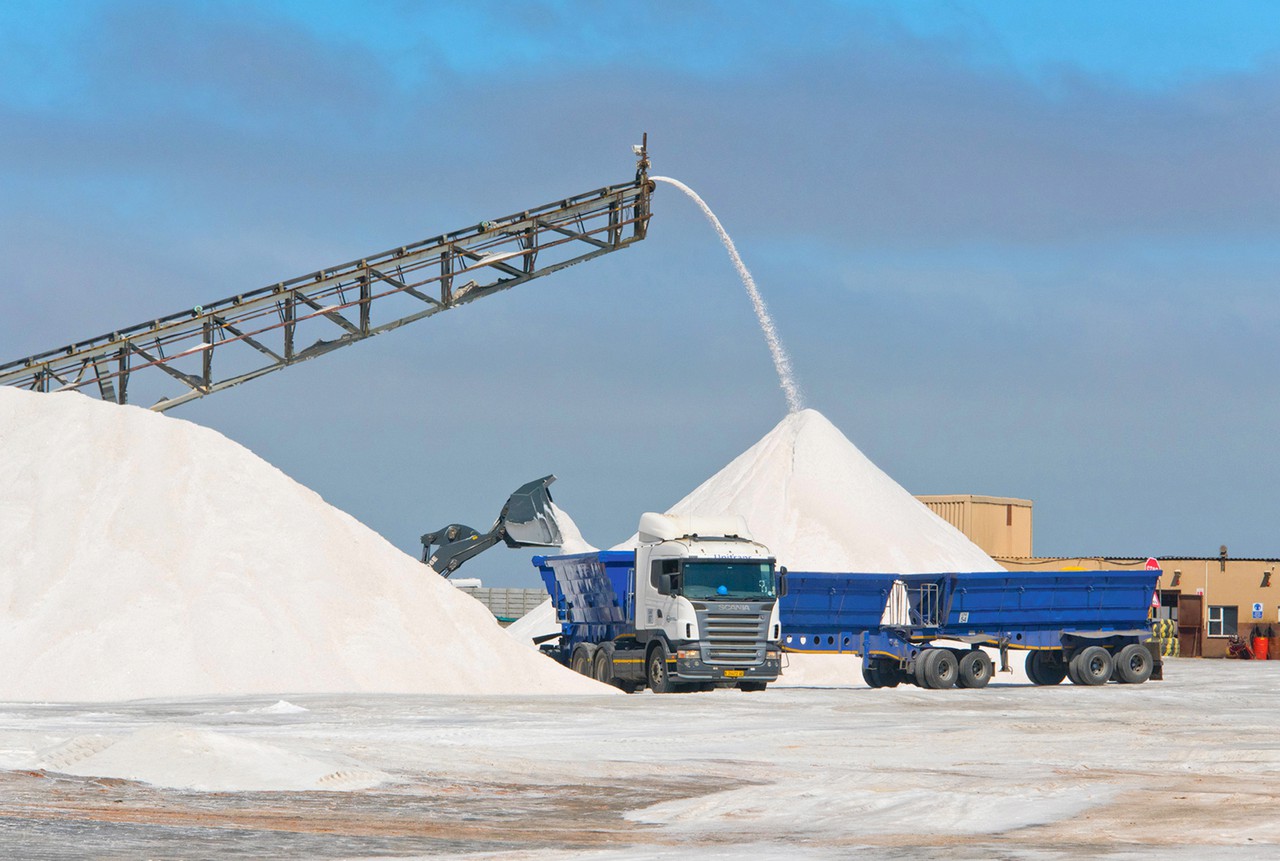
The Walvis Bay operation began in 1964. Seawater moves through ponds where sun and wind drive evaporation. As the brine becomes more concentrated, salt crystallizes and is harvested for processing.
Walvis Bay connects the saltworks to export markets. Salt travels from the processing plant south of town to the port.
Walvis Bay Salt’s history ↗ · Salt production and port logistics ↗
From the salt ponds to the workshop
The machinery behind the harvest
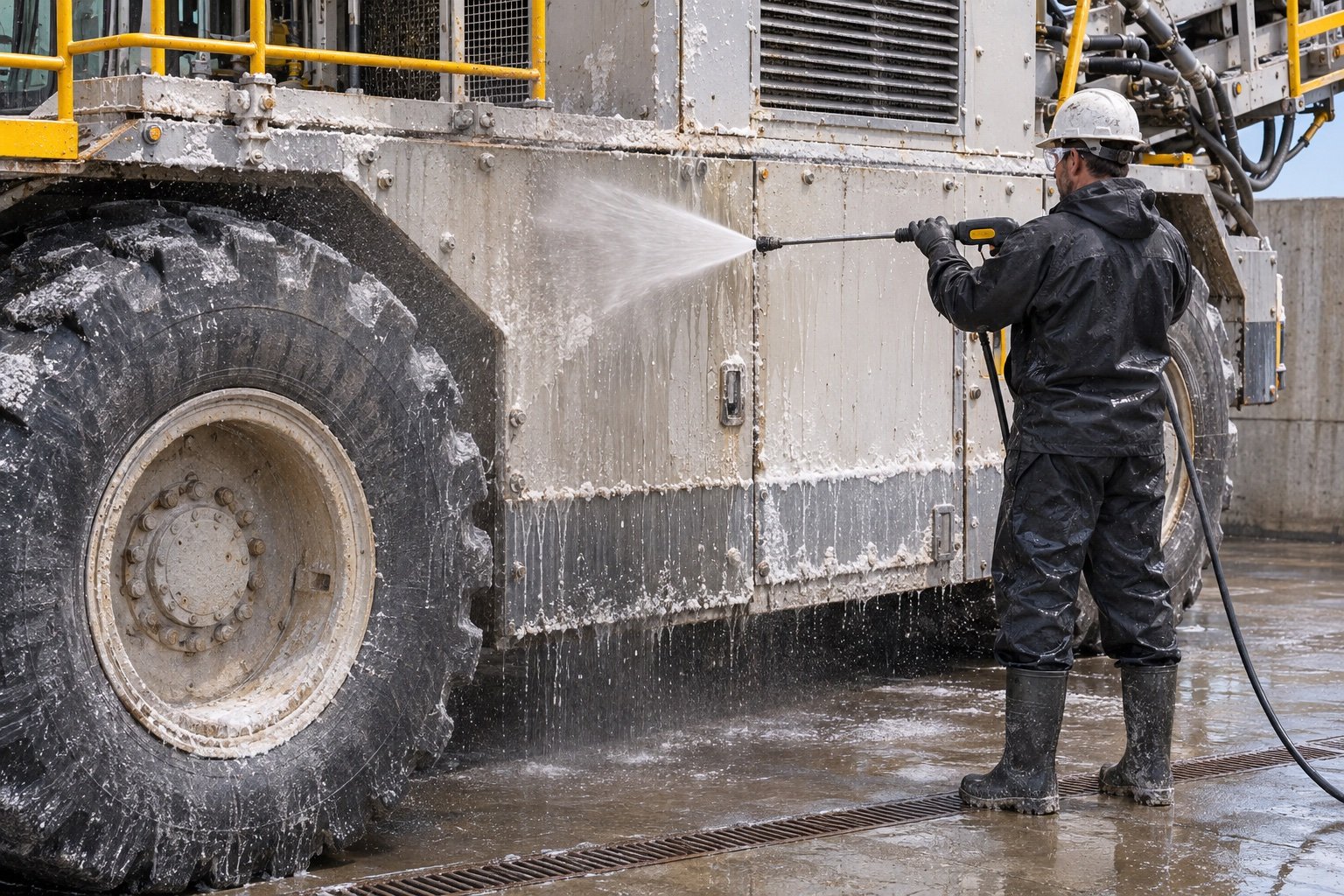
Mechanical harvesters remove the layer of salt from the crystallization ponds. Salt deposits can build up on panels and other exposed surfaces, where they contribute to corrosion.
How SALT-X helps protect machinery
In industrial maintenance, SALT-X is used to remove salt deposits from compatible surfaces and help protect high-value equipment from corrosion.
The manufacturer confirmed that Walvis Bay Salt Holdings purchases SALT-X in Namibia and authorized naming the company as a commercial reference.