
Vehicles · Cartagena de Indias
What to do after your car floods in Cartagena
What to do immediately, on the first day and in the months that follow.
The rain passes. The salt stays.
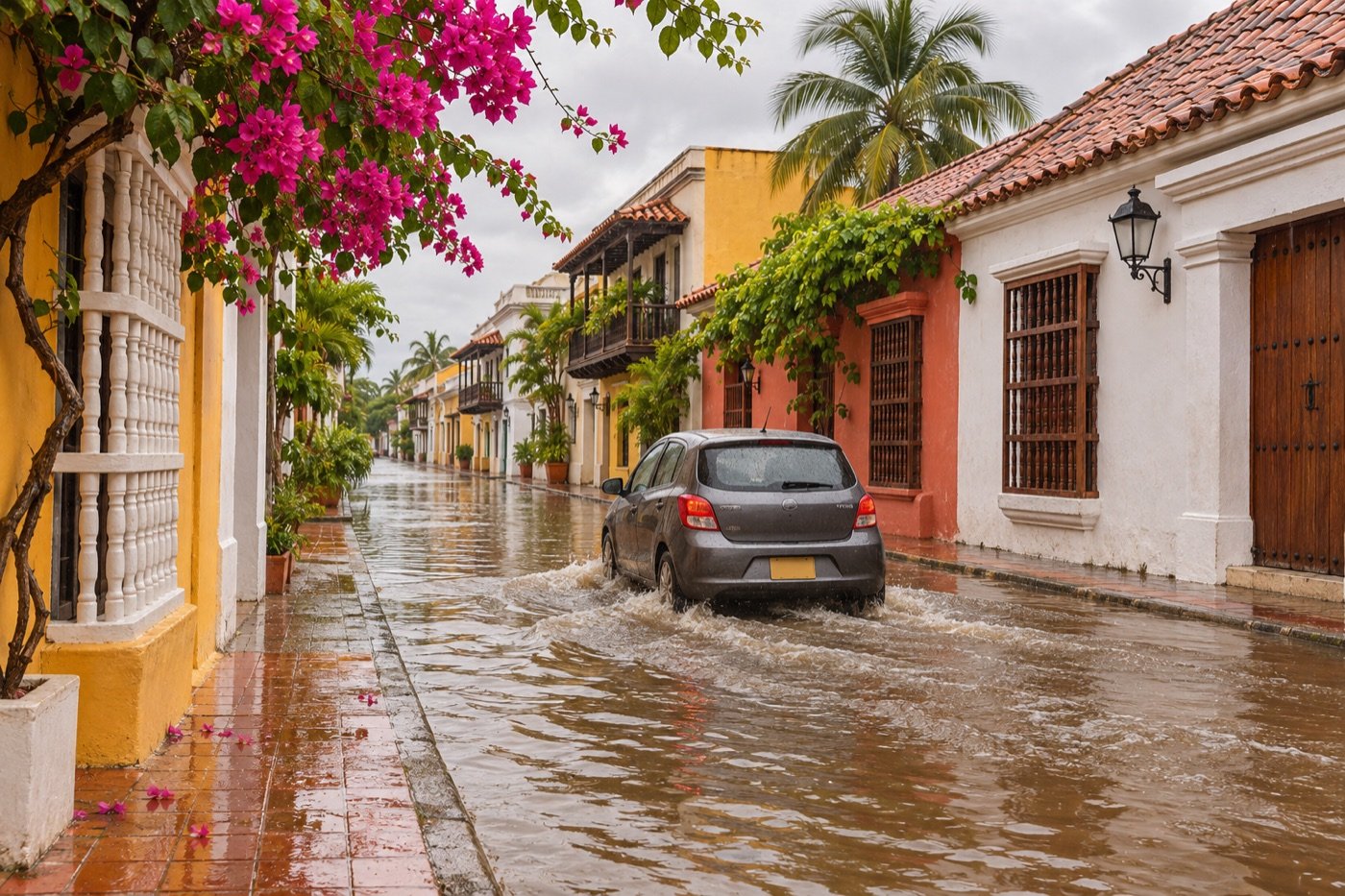
Water from curb to curb. The car in front raises a wave that reaches its running boards. The wave subsides and the street seems passable again. From the driver's seat you cannot see the edge of the curb or the pothole that may be hidden below.
In Cartagena, a street can be flooded by a downpour, by a high tide, or by both at the same time. If the sea came onto the road, the splashes can leave salts on the car parts when the water evaporates. DATT High Tides Advisory.
The first few minutes: the car stalls in floodwater
The first impulse is to turn the key again. If water entered the cylinders through the intake, the starting attempt could seriously damage the engine. The piston rises and encounters water, which is practically not compressed.
Once everyone is safe, leave the engine off and call for a tow truck. If the car was in deep water, it needs a professional inspection even if it got out under its own power. Tell the shop how high the water rose and if the engine shut down. AAA Recommendations for Flooded Vehicles.
First day: the bodywork is now dry
There is another scenario. The car arrived home, the interior is dry and everything on the dashboard looks normal. The next day, only a strip of mud remains of the puddle next to the curb.
What matters now is how far the water went. A wet mat or a water mark inside the car after the flood are reasons to consult the shop. If the water could reach electrical or brake components, a professional inspection is necessary.
If the exposure was limited to sea water splash, attend to the areas that received the water. The salts can remain around the fastenings, in the wheel arches and under the car. Rinse compatible surfaces with fresh water following the vehicle manufacturer's directions. Consult these instructions before using pressurized water or products near connectors, sensors or electronic modules. If the underbody already has an anti-corrosion coating, first review how it should be cared for. Underbody care with anti-corrosion coating.
Months later: a seized bolt
When it's time to change a suspension part, that flooded street may have been forgotten. But a bolt seized by corrosion can turn a routine change into a job that ends with the bolt sheared. During subsequent maintenance, pay attention to the condition of the brake lines, suspension mountings and areas where the coating has come off.
The water evaporates. Salts left on the metal can re-dissolve when the surface gets wet. This increases the conductivity of the water film in which corrosion occurs. Near the sea it is enough for the surface to become moist again for the cycle to repeat itself.
An outdoor exposure study in Cartagena recorded corrosion in carbon steel samples during the first year. In a car, the rate of deterioration of each part depends on the metal, the coating and the conditions of use. Study of atmospheric corrosion in Colombia.
Salt deposits can be removed. If corrosion has already weakened a part, its condition is evaluated in the workshop. The next morning, the dry asphalt only says that the water is gone from the street. To decide what to do with the car, remember where it came from and how high the water rose.